|
AMERICAN consumers do have a choice at the grocery store, but those choices have a price tag, according to a survey by IBISWorld, which provides databases for industries around the world.

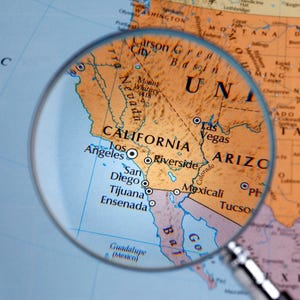
To measure consumer spending across the U.S., the firm surveys how much consumers spend on groceries buying private, or store, brands versus national brands and organic food per grocery shopping trip. The firm surveyed grocery shoppers in Los Angeles, Cal., and New York, N.Y., for East Coast and West Coast samplings and in Chicago, Ill., for a Midwest sampling.
Results are shown in the Table.
|
Cost of groceries ($ per shopping trip) |
|
|
Store |
National |
Organic |
Average |
|
City |
brand |
brand |
food |
for city |
|
Chicago |
92.04 |
112.20 |
142.95 |
115.73 |
|
Los Angeles |
105.84 |
122.63 |
135.80 |
121.42 |
|
New York |
104.54 |
121.06 |
142.37 |
122.66 |
|
U.S. average |
100.81 |
118.63 |
140.37 |
-- |
|
Source: IBISWorld. |
In all cities, buying store brands is the least expensive option, and buying organic foods is the most expensive option, according to the survey.
Chicago is the cheapest place to buy groceries, except for organic groceries, which are cheaper in Los Angeles than in Chicago or New York, according to the survey. IBISWorld senior analyst George Van Horn said this is likely because of the food production volume in California, especially for fresh produce, which is the largest organic segment, with California accounting for more than 50% of the country's melon and vegetable production.
Van Horn noted that while the average organic shopping trip is 18% more costly than the shopping cart filled mostly with national brands and "a staggering" 39% more costly than the cart filled primarily with store brands, the organic food market continues to expand and is projected to grow 4% this year.
IBISWorld, headquartered in Los Angeles, serves business, government and professional organizations through more than 10 locations worldwide. |